
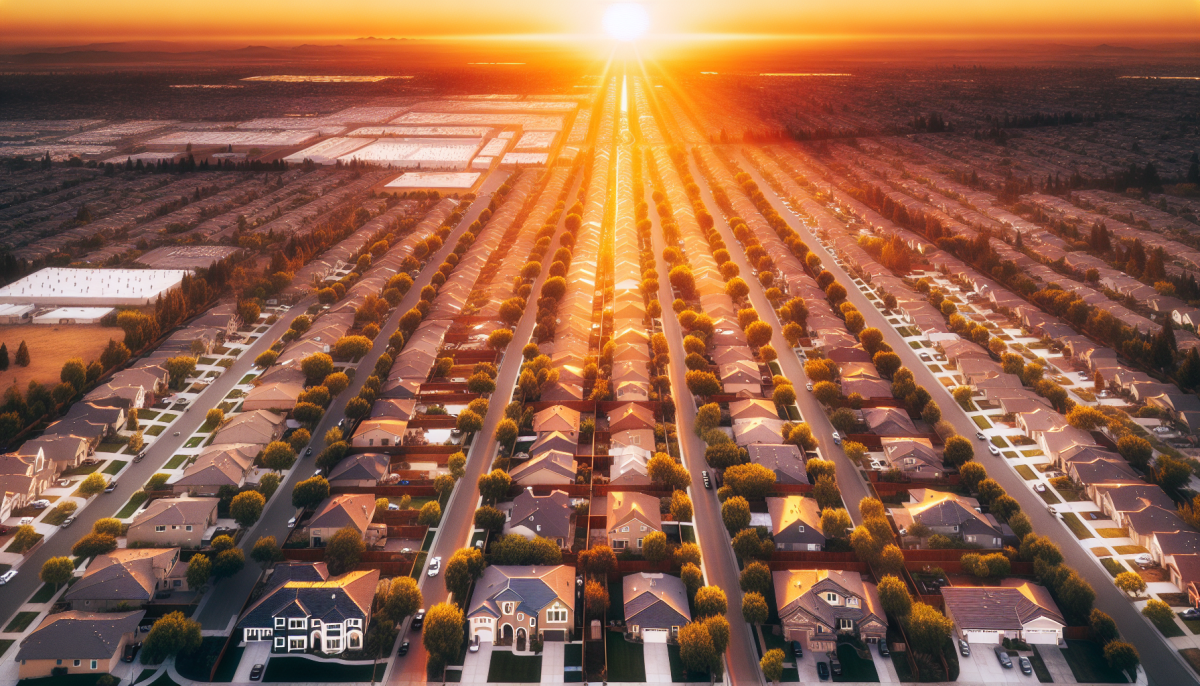
Welcome to today’s real estate news roundup! In California, the housing market is facing significant developments and challenges. A $10 billion affordable housing bond failed to make it onto the November ballot, raising concerns about funding for housing programs. However, a $20 billion regional bond measure offers hope for much-needed funding. Meanwhile, the unfinished wetlands of Playa Vista in Los Angeles highlight the ongoing struggle between development and environmental preservation. We’ll also explore the cities in California with the fastest-growing home prices, where buyers are competing for limited housing inventory. Let’s dive into these stories and gain valuable insights into the ever-evolving world of real estate in California.
Why a $10 Billion California Housing Bond Won’t be on November’s Ballot | KQED
A $10 billion statewide affordable housing bond has unfortunately failed to make it onto the November ballot in California. This news raises concerns among housing advocates about funding, especially after the state cut over a billion dollars from such programs. The proposed bond, AB 1657, had widespread support from housing advocates and city officials across the state. It aimed to authorize general obligation bonds for affordable rental housing programs, supportive housing for the homeless, and more.
However, due to the Legislature having other bonds to consider and limited capacity for new borrowing amidst a multibillion-dollar budget deficit, AB 1657 did not progress. Corey Smith, executive director of the Housing Action Coalition, expressed disappointment but understood the tough decisions faced by the Legislature. He emphasized that housing is a climate issue and highlighted the need for funding.
Despite this setback, there is still hope for much-needed funding through a $20 billion regional bond measure that will appear on the November ballot. In San Francisco alone, there are already entitled housing units ready to build, awaiting the necessary funding. The state’s revenue gap and budget cuts have further emphasized the urgency of addressing affordable housing challenges.
In November, Bay Area voters will also have the opportunity to vote on Propositions 5 and 33, which aim to make it easier to pass bonds and taxes for affordable housing and expand rent control, respectively.
Unfinished Playa Vista wetlands tell the story of CA housing | Opinion
In Los Angeles, the unfinished wetlands of Playa Vista serve as a reminder of the complex and often contentious struggle between development and environmental preservation. Playa Vista, a community that took decades to plan and construct, stands as an extraordinary achievement in a city where housing is notoriously difficult to create. However, the adjacent wetlands remain unrestored due to opposition from self-proclaimed environmentalists, creating a paradoxical situation.
The battle over Playa Vista involved environmentalists, developers, politicians, and legal proceedings. It exemplifies the opposing priorities faced in California, where environmental concerns and the need for affordable housing collide. The restoration of the wetlands has been delayed by lawsuits and objections, despite scientific support for the proposed plan. Compromises have been elusive, hindering progress and diverting resources.
The wetlands, once degraded by oil drilling and construction, are now owned by the state and protected as an ecological reserve. However, they require extensive restoration to regain their ecological functions. Critics argue for a “gentle approach” to land management, while proponents emphasize the necessity of using heavy equipment for effective restoration. The clash between these viewpoints prolongs the delay and hampers the project’s budget.
Playa Vista itself has become a thriving community, home to thousands of residents and various amenities. It represents what is possible in terms of housing development, but the unfinished wetlands highlight the challenges faced in achieving environmental restoration. The struggle between private and public interests, along with the difficulties of navigating legal processes, underscores the need for more efficient and collaborative approaches to address California’s housing and environmental needs.
Cities With the Fastest-growing Home Prices in California | Stacker
The real estate market in California continues to experience a frenzy, with buyers competing for a limited supply of housing, leading to increased prices for affordable properties. The typical home value in the United States was $360,310 in May, showing a 3.9% increase compared to the previous year. While mortgage rates have slowed growth and even caused price declines in some areas, certain cities in California are still witnessing significant price jumps.
Stacker compiled a list of cities with the fastest-growing home prices in California using data from Zillow. The rankings are based on the dollar change in the Zillow Home Values Index for all homes over the 12 months ending in May 2024. The list includes 50 cities and towns in California, showcasing the varying growth rates across the state.
Some notable cities with fast-growing home prices in California include:
- San Francisco-Oakland-Berkeley metro area: Typical home value of $1,327,775 with a 1-year price change of +$157,263 (+13.4%).
- Santa Maria-Santa Barbara metro area: Typical home value of $2,711,917 with a 1-year price change of +$158,159 (+6.2%).
- Los Angeles-Long Beach-Anaheim metro area: Multiple cities with significant price changes, such as a typical home value of $1,379,536 in Los Angeles (+$158,231, +13.0%) and $1,202,351 in Long Beach (+$159,030, +15.2%).
These are just a few examples, and the complete list provides insights into the dynamic housing market in California.